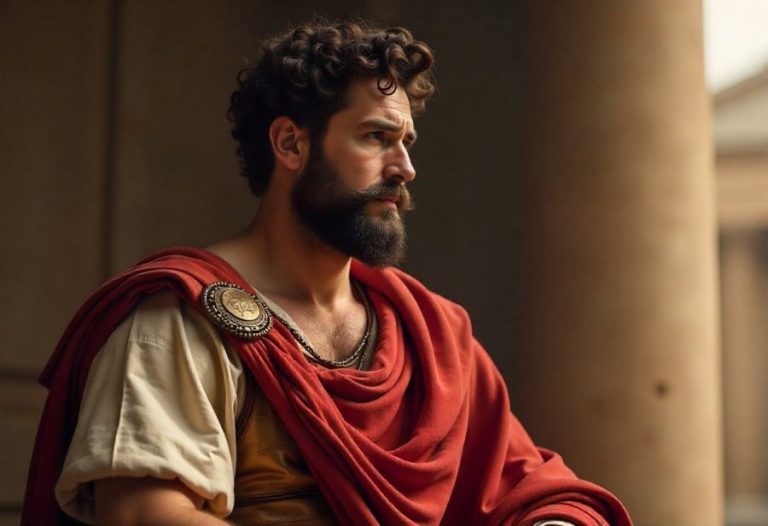
Galileo Galilei’s groundbreaking discoveries revolutionized our understanding of the universe, yet his relentless defiance of tradition and authority raises a compelling question: was he a martyr for progress? His pioneering use of the telescope shattered long-held geocentric beliefs, challenging the church’s divine authority and sparking fierce conflict. Despite facing censorship and forced recantation, Galileo’s unwavering commitment to empirical evidence transformed science and society, inspiring a culture of inquiry rooted in skepticism and independent thought. His story is a stirring testament to the power of courage and resilience in the pursuit of truth, illustrating how questioning entrenched dogma can ignite societal change. As a symbol of resistance against censorship and authority, Galileo’s legacy endures, urging us to challenge accepted wisdom and value evidence-driven progress. Could his daring stand against powerful institutions be the key to unlocking our future of discovery and intellectual freedom?
Galileo Galilei: The Father of Modern Science and the Spirit of Independence
Galileo Galilei is widely regarded as the father of modern science, a figure whose ideas and discoveries dramatically reshaped our understanding of the universe. His use of the telescope and meticulous observations challenged long-held beliefs, opening new horizons for scientific inquiry. But beyond his technical achievements, Galileo’s story is also one of courage and defiance. He questioned authority, stood up to powerful institutions, and prioritized evidence over dogma, becoming a symbol of intellectual independence.
His influence extends far beyond the realm of astronomy. Galileo demonstrated that scientific progress depends on questioning tradition and verifying claims through observation and experimentation. His approach laid the groundwork for the scientific method we rely on today—one rooted in skepticism, logical reasoning, and empirical evidence. By doing so, he helped shift society’s mindset from unquestioning acceptance of authority to one driven by curiosity and rational inquiry.
Galileo’s legacy is also rooted in his willingness to challenge the status quo, even at great personal risk. His discoveries, such as Jupiter’s moons and Venus’s phases, directly contradicted the dominant geocentric model supported by the church. These revelations not only revolutionized astronomy but also ignited fierce debates about the relationship between science, religion, and authority. His courage to stand firm in the face of opposition made him a pioneer whose influence extended well beyond his lifetime.
More than a scientist, Galileo became a symbol of resistance against dogma and censorship. His refusal to accept the limitations imposed by tradition encouraged future generations to think independently and question authority. His life exemplifies how scientific progress often requires boldness, resilience, and a willingness to challenge deeply ingrained beliefs. In doing so, he transformed not just science but also societal attitudes toward knowledge and truth.
Today, Galileo’s story continues to inspire those committed to progress and intellectual freedom. His legacy reminds us that questioning accepted ideas and standing up for evidence can lead to profound societal change. His pioneering spirit encourages us to explore beyond conventional boundaries, fostering a culture where curiosity, skepticism, and innovation thrive. In this way, Galileo remains a timeless symbol of the relentless pursuit of truth.
Breaking the Chains of Ancient Views: The Societal Roots of the Scientific Revolution
Before Galileo’s groundbreaking discoveries, the way people understood the universe was largely shaped by medieval and Aristotelian ideas that had been dominant for centuries. Society believed Earth was the center of everything, a view reinforced by religious teachings that saw the cosmos as a divine creation with humans at its core. This geocentric model, supported by the church, placed Earth at the universe’s very heart, with planets and the Sun orbiting in perfect circles. Scientific explanations relied heavily on philosophical authority, with little room for questioning, and any deviation from accepted views was met with suspicion or outright rejection. This worldview created a universe seen as unchanging and harmonious, reflecting divine perfection.
This perspective didn’t just influence science; it was woven into religious doctrine and social norms. The church’s authority extended into cosmology, interpreting sacred texts as literal truths about the universe’s structure. The idea that Earth was the immovable center was seen as divine truth, and challenging it was tantamount to challenging the divine order itself. As a result, any new ideas that threatened this view faced fierce opposition, often leading to censorship or persecution. Scientific inquiry was limited to philosophical musings rather than empirical investigation, and the cosmos was regarded as a fixed, perfect sphere, with celestial bodies moving in flawless orbits.
The scientific landscape was also rooted in the work of ancient Greek thinkers like Ptolemy and Aristotle. Their models depicted a universe of perfect circles and spheres, ideas that seemed both elegant and aligned with religious ideals of harmony. These views became deeply ingrained, shaping the mindset of scholars and society alike, with observation playing a minor role due to technological limitations. Instead, reliance on authority, tradition, and logical deduction kept these ideas intact for centuries, creating a rigid framework that was hard to challenge.
Galileo’s later discoveries, such as Jupiter’s moons and Venus’s phases, directly challenged these entrenched beliefs. Using a telescope—an innovative tool at the time—he revealed celestial phenomena that didn’t fit the geocentric model. Jupiter’s moons showed that not everything revolved around Earth, and Venus’s phases proved that the planet orbits the Sun, not Earth. These observations shattered the idea of a perfect, unchanging universe and revealed a cosmos full of complexity and motion, setting the stage for a scientific revolution.
His approach emphasized careful observation, experimentation, and logical reasoning, marking a clear departure from reliance on authority and tradition. Galileo’s methods laid the groundwork for the scientific method, encouraging a new way of acquiring knowledge based on evidence. This shift inspired others to question long-held assumptions and to test theories against empirical data, gradually transforming the scientific community’s approach and attitude towards understanding the universe.
This period of upheaval and discovery was not just about changing facts; it was about challenging the very foundations of accepted truth. Galileo’s discoveries acted as catalysts, pushing society to reconsider the authority of ancient texts and philosophical dogma. His work helped ignite a broader movement towards scientific inquiry rooted in skepticism and evidence—principles that continue to underpin modern science today.
Clash of Beliefs: Galileo’s Bold Stand Against Religious Authority
Galileo’s support for heliocentrism brought him into direct conflict with the powerful religious authorities of his time. The Catholic Church upheld the geocentric model, which placed Earth at the universe’s center—a view rooted in biblical interpretation and centuries of tradition. This wasn’t just a scientific belief; it was a core element of their doctrine, seen as divine truth. When Galileo’s telescopic discoveries—such as Jupiter’s moons and Venus’s phases—challenged this view, they threatened the church’s authority to define cosmic truth. Instead of embracing the evidence, church leaders viewed these findings as heretical, fearing they undermined biblical authority and the divine perfection of the heavens.
Galileo’s observations directly challenged the sacred order many believed had been divinely established. The discovery of moons orbiting Jupiter proved that not everything revolved around Earth, directly contradicting the idea of a perfect, unchanging universe. Similarly, Venus’s changing phases confirmed that the planet must orbit the Sun, not Earth. These revelations shook the foundations of accepted beliefs, stirring unease among religious leaders who saw them as a threat to biblical literalism. The church responded swiftly, summoning Galileo before the Inquisition and forcing him to recant his findings under threat of punishment. His trial became a symbol of the broader clash between emerging scientific evidence and entrenched religious dogma.
This confrontation was more than a battle over facts; it was a struggle over who held the authority to interpret truth. The church believed divine revelation and sacred texts provided the ultimate authority on the cosmos. Galileo’s reliance on observation and reason challenged this divine order, threatening to topple the hierarchy of knowledge. Despite mounting evidence, the church clung to its geocentric stance, branding Galileo’s ideas heresy. His case exemplified how, at the time, scientific inquiry was often viewed as a challenge to faith, leading to censorship, persecution, and personal risk for those daring to question established doctrine.
In 1633, Galileo’s forced recantation marked a turning point. Under immense pressure, he publicly abandoned his heliocentric views and was placed under house arrest. Yet, even after his conviction, his belief in his discoveries remained unwavering. His willingness to stand by empirical evidence despite personal consequences made him a symbol of resistance. The conflict highlighted the deep tension between faith and reason, and how challenging dogma could come at a heavy price. Galileo’s defiance laid the groundwork for future battles over scientific independence and intellectual freedom.
His confrontation with authority reminds us that progress often requires courage and resilience. By daring to challenge the sacred and the accepted, Galileo set a precedent that science must be driven by evidence, not dogma. His story underscores the importance of questioning authority and standing firm in the pursuit of truth, even when it means risking everything. It was a fight not just for scientific discovery but for the very right to think freely and challenge entrenched power structures—an enduring lesson that continues to resonate today.
The Power of Defiance: How Galileo’s Resistance Shaped Future Science and Society
Galileo’s unwavering resistance to authority set a powerful precedent that transformed both science and society. His insistence on evidence-based inquiry challenged long-standing dogmas, encouraging future scientists to pursue independent thinking and innovation. By demonstrating that progress depends on questioning accepted beliefs and rigorously testing ideas, he inspired a culture where skepticism and curiosity became fundamental. This shift not only advanced scientific discovery but also fostered a mindset that values intellectual independence and the courage to challenge authority.
His approach laid the groundwork for the scientific method we still rely on today. Galileo’s emphasis on careful observation, experimentation, and logical reasoning shifted the focus from reliance on tradition and philosophical authority to empirical evidence. His discoveries—like Jupiter’s moons and Venus’s phases—proved that celestial phenomena could be understood through direct investigation, not just sacred texts or ancient theories. This move away from dogma toward data-driven understanding helped ignite a broader movement toward scientific skepticism and inquiry.
Galileo’s defiance extended beyond individual breakthroughs; he became a symbol of resistance against censorship and censorship’s suppression of truth. His willingness to stand firm in the face of opposition inspired subsequent generations to question authority and seek truth independently. This legacy of defiance encouraged a broader societal shift, fostering an environment where ideas could be freely debated and tested without fear of persecution. His example showed that true progress often requires courage, resilience, and a refusal to accept the status quo.
The influence of Galileo’s resistance also reshaped societal attitudes toward knowledge and authority. His challenge to the church’s dominance over cosmology questioned who should hold the power to define truth. His life demonstrated that scientific progress often comes at great personal risk but is essential for societal advancement. By standing up for evidence and reason, he helped pave the way for a future where science and free thought could flourish, laying the foundation for modern notions of intellectual freedom.
Today, Galileo’s legacy endures as a testament to the power of individual bravery in the face of entrenched authority. His resistance reminds us that questioning, skepticism, and evidence are vital tools for progress. His life illustrates that standing up for truth can spark societal change, inspire innovation, and ultimately lead to a more open, curious, and resilient society. Galileo’s story continues to inspire those committed to challenging the status quo in pursuit of a better understanding of the world.
Reflections on Courage and Discovery: The Enduring Legacy of Galileo’s Quest for Truth
Galileo’s influence extends far beyond his groundbreaking discoveries; it fundamentally reshaped our approach to understanding the universe. His unwavering focus on observation, experimentation, and logical reasoning laid the foundation for the scientific method we use today. By emphasizing evidence over tradition or authority, he demonstrated that progress depends on questioning accepted beliefs and rigorously testing ideas. This mindset encouraged future generations to pursue independent inquiry and fostered a culture where skepticism and curiosity are valued as essential tools for discovery.
His resistance to established norms created a lasting legacy of intellectual independence. Galileo proved that challenging dogma and relying on empirical data could lead to profound societal change. His courage to stand firm against powerful institutions showed that advocating for truth often involves personal risk, but it also opens the door for societal progress. His example inspired countless scientists and thinkers to question authority and seek knowledge beyond accepted boundaries, laying the groundwork for a more open and inquisitive society.
Galileo’s innovative use of tools like the telescope revealed a universe full of complexity and motion, contradicting the long-held notion of a perfect, unchanging cosmos. These discoveries made it clear that direct evidence and careful observation are vital in understanding nature. His approach marked a decisive shift from reliance on sacred texts and philosophical speculation to data-driven science. This transformation not only advanced astronomy but also redefined how knowledge is acquired and validated, fostering a scientific mindset rooted in curiosity, skepticism, and empirical proof.
The battles Galileo fought—against censorship, dogma, and authority—highlight the importance of resilience and conviction in the pursuit of truth. His unwavering commitment, even under threat of persecution, underscores that meaningful progress often requires courage and tenacity. His life exemplifies how standing up for evidence and reason can challenge entrenched beliefs and inspire societal change, reinforcing that the path to knowledge is often paved with resistance but ultimately leads to enlightenment.
Galileo’s legacy continues to serve as a beacon for those committed to progress and intellectual freedom. His story affirms that questioning accepted ideas and pushing beyond conventional limits are crucial in driving innovation. His resistance reminds us that scientific and societal advancements depend on individual bravery, the willingness to challenge authority, and an unwavering belief in the power of evidence. In a world still grappling with dogma and censorship, his example urges us to pursue truth relentlessly.
Looking back, Galileo’s life embodies the relentless spirit of curiosity and resilience that drives human progress. His pioneering efforts not only revolutionized science but also challenged societal norms, emphasizing that real change begins with individuals willing to question the status quo. His legacy proves that truth is worth fighting for and that progress often hinges on the courage to stand against opposition. By embracing this spirit, we continue the quest for knowledge, inspired by a man who dared to challenge everything in pursuit of a deeper understanding of the universe.
About the Author