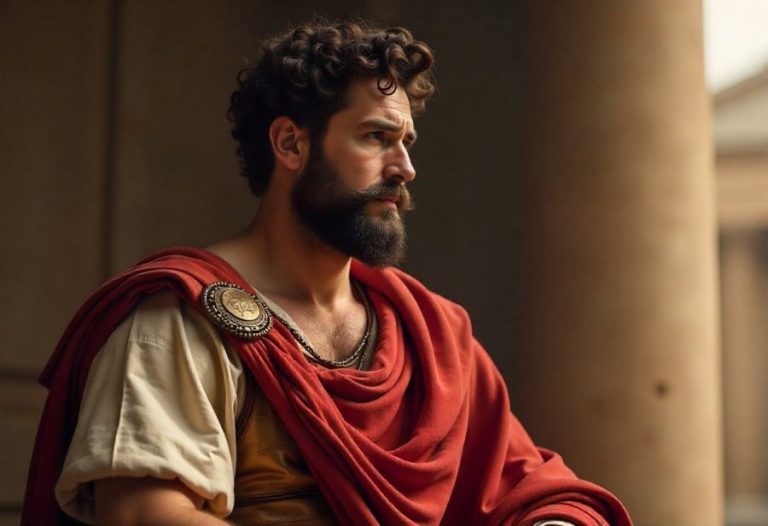
Step into the fascinating world of Cleopatra VII, a ruler whose intelligence and strategic mastery reshaped ancient Egypt and challenged the might of Rome. Far more than her legendary beauty, Cleopatra’s legacy is rooted in her shrewd diplomacy, cultural savvy, and resilience amid chaos. Her rise to power was a calculated dance of alliances, political cunning, and cultural symbolism, navigating internal strife and external threats with unwavering resilience. Her relationships with Julius Caesar and Mark Antony were strategic moves that extended beyond personal ties, exemplifying her talent for perception and influence in a male-dominated world. But could her true power lie in her ability to inspire loyalty and forge lasting alliances, rather than military might alone? Her story invites us to reconsider what genuine leadership entails—how intelligence, adaptability, and emotional insight forge a legacy far greater than legend. Cleopatra’s life remains a timeless blueprint for mastering influence in a turbulent world.
Cleopatra’s Enduring Legacy: Leadership, Strategy, and Influence
Cleopatra VII is widely remembered as one of history’s most intriguing and influential leaders. Her reputation as a beautiful and charismatic ruler often dominates discussions, but beneath her legendary allure lay a sharp mind and unparalleled strategic skill. Cleopatra’s true legacy rests on her ability to lead with intelligence, adapt to changing circumstances, and wield influence in a male-dominated world. She was not just a queen by birthright; she was a master diplomat and tactician who navigated Egypt through some of its most turbulent times.
As the last pharaoh of ancient Egypt, Cleopatra inherited a kingdom beset by internal strife and external threats. Her rise to power was far from accidental—it was a calculated effort to preserve Egypt’s independence amid a shifting political landscape. She understood that leadership required more than royal blood; it demanded resilience, shrewdness, and the ability to forge alliances that could tip the balance of power. Her leadership was characterized by a blend of political savvy and cultural appeal, allowing her to maintain her throne against formidable enemies.
Her relationships with powerful Roman figures like Julius Caesar and Mark Antony are often highlighted, but these alliances were more than personal affairs—they were strategic moves designed to strengthen her position. Cleopatra’s diplomatic mastery was rooted in her ability to use influence, symbolism, and timing to her advantage. She projected strength through her intelligence and charisma, demonstrating that influence was often about perception as much as power. Her skill in diplomacy helped her sustain Egypt’s independence longer than many expected.
Throughout her reign, Cleopatra broke away from traditional gender roles, projecting confidence and authority in a world that often underestimated women leaders. Her leadership style combined diplomacy with assertiveness, inspiring loyalty from her followers and respect from her rivals. She understood that resilience and adaptability were essential tools in a volatile political environment, and she used both to her advantage. Her ability to respond swiftly to threats and opportunities cemented her reputation as a formidable ruler.
Beyond her lifetime, Cleopatra’s influence continues to resonate. She set a precedent for powerful women in leadership, proving that intelligence and strategic thinking surpass gender stereotypes. Her mastery of diplomacy and cultural symbolism demonstrated that influence is rooted in understanding human nature and perception. Her legacy inspires modern leaders to prioritize resilience, cultural insight, and strategic patience—traits that remain vital in today’s complex world.
Cleopatra’s story is a testament to the power of influence, resilience, and intelligence. She showed that true leadership involves more than just holding a title; it’s about shaping perceptions, forging alliances, and adapting to evolving circumstances. Her remarkable ability to navigate a fractured, competitive world left a lasting mark on history, proving that strategic thinking and resilience can create a legacy far greater than legend.
Navigating Turbulence: The Political Landscape of Cleopatra’s Rise
During Cleopatra’s rise to power, Egypt was navigating a volatile and complex political landscape. The Ptolemaic dynasty, of Greek origin and established by one of Alexander the Great’s generals, had ruled Egypt for nearly three centuries. Over time, internal family disputes and rival factions frequently threatened the stability of the throne, turning leadership into a delicate game of diplomacy and cunning maneuvers. Meanwhile, the broader regional scene was shifting rapidly as Rome expanded its influence across the Mediterranean. What was once a fragmented collection of city-states and smaller kingdoms was transforming into a rising empire, with Rome’s power looming larger every year.
Born into this turbulent environment, Cleopatra was educated in diplomacy, languages, and political strategy from a young age. Her father, Ptolemy XII, struggled to maintain control amid internal dissent and external pressures from neighboring powers. When he died, Cleopatra, only about 18, faced a fierce struggle to consolidate her authority. Her initial co-rule with her younger brother Ptolemy XIII quickly devolved into a bitter power struggle, with factions vying for control. Cleopatra’s sharp instincts and understanding of court intrigue became her most valuable assets as she navigated this perilous landscape, forming alliances, playing factions against each other, and positioning herself as the legitimate ruler.
Egypt’s internal politics during her ascent balanced tradition with innovation. The Ptolemies, though of Greek descent, maintained Egyptian religious symbols and cultural practices to legitimize their rule. Yet, conflicts within the royal family and factional rivalries often erupted into open violence, forcing Cleopatra to act both as diplomat and strategist. External threats, especially from Rome, added another layer of danger. Rome was steadily increasing its influence in the eastern Mediterranean, and Cleopatra understood that her survival depended on her ability to adapt, forge alliances, and project strength.
Her strategic acumen became clear as she navigated these treacherous waters. She realized that military might alone wouldn’t secure her throne; influence through diplomacy and cultural symbolism was equally vital. Her relationships with Julius Caesar and later Mark Antony were carefully crafted moves to secure her position and safeguard Egypt’s independence. These alliances weren’t just personal—they were calculated efforts to shape the regional balance of power in her favor. Cleopatra knew that influence was often about perception, timing, and understanding the broader political currents.
Throughout her ascent, Cleopatra demonstrated resilience and a keen sense of timing. She recognized that her strength lay in her intelligence and her ability to respond swiftly to shifting circumstances. Her rise was not simply about personal ambition but about turning chaos into opportunity. By mastering diplomacy, cultivating cultural influence, and responding strategically to threats, she laid the groundwork for her remarkable reign and her legendary leadership in a fractured and competitive region.
Her story is a testament to her ability to adapt and outmaneuver her rivals in a world dominated by larger powers. Cleopatra’s rise was driven by her capacity to read her environment, build alliances, and leverage cultural symbolism to bolster her legitimacy. Her mastery of these skills allowed her to maintain her throne longer than many expected, resisting external domination while keeping Egypt’s independence alive. Her rise exemplifies how influence, when used wisely, can be just as powerful as military conquest, especially in a world where perception shapes reality.
In the end, Cleopatra’s ascent was rooted in her strategic vision and resilience in the face of overwhelming odds. Her understanding that political power was as much about influence and perception as it was about force enabled her to carve out a place in history. Her ability to adapt to changing circumstances, forge pivotal alliances, and use cultural symbolism to reinforce her legitimacy transformed her from a mere princess into a legendary ruler. This complex, turbulent period set the stage for her extraordinary reign and her enduring legacy as a master of influence and diplomacy.
Mastering Diplomacy: Cleopatra’s Genius in Shaping Power and Alliances
Cleopatra’s diplomatic skills were at the core of her ability to steer Egypt through an era of relentless upheaval. She understood that influence was built not just on military strength but on forging strategic relationships and shaping perceptions. Her alliance with Julius Caesar exemplifies this approach perfectly. By aligning herself with Rome’s most formidable leader, she secured critical military support and enhanced her political stature. Their relationship was a masterclass in mutual respect and calculated diplomacy, culminating in the birth of Caesarion, which solidified her claim and demonstrated her ability to turn personal influence into strategic advantage.
Her relationship with Mark Antony further highlighted her diplomatic finesse. Cleopatra viewed this alliance as a calculated move to counterbalance Rome’s dominance, carefully navigating the complex Roman political landscape. She used marriage, cultural diplomacy, and negotiation as tools to project strength and influence, always adapting her approach to shifting circumstances. Her ability to sway key Roman figures and shape outcomes in favor of Egypt underscored her skill in influence and negotiation.
Cultural diplomacy played a vital role in her strategy. Cleopatra presented herself as both a political and spiritual leader, blending Egyptian religious traditions with Roman customs. This duality reinforced her legitimacy and fostered loyalty among her subjects while earning respect abroad. She understood that perception was as powerful as reality, leveraging symbolism and cultural resonance to bolster her authority. Her mastery of cultural diplomacy helped her forge a unifying image that transcended political borders.
Timing and perceptive reading of her environment were crucial to her diplomatic success. Cleopatra knew exactly when to negotiate, when to build alliances, and when to assert her independence. Her relationships with Caesar and Antony weren’t merely personal—they were meticulously crafted political tools designed to serve Egypt’s long-term interests. Her influence extended beyond personal ties; it was rooted in her ability to manipulate perceptions and respond swiftly to the ever-changing political landscape.
Throughout her reign, Cleopatra demonstrated that influence could be wielded through persuasion, symbolism, and strategic negotiation. She recognized that winning hearts and minds was essential for maintaining her throne, especially in a world where external powers threatened her independence. Her diplomatic finesse allowed her to turn potential enemies into allies and rivals into acknowledgers of her authority, often transforming threats into opportunities.
Her mastery in diplomacy set her apart from many of her contemporaries. Cleopatra showcased that effective leadership depends on understanding and shaping perceptions, not just on force or titles. Her alliances with Rome’s top figures were strategic tools that protected her realm and extended her influence far beyond Egypt’s borders. This ability to combine persuasion, cultural insight, and timing made her a true diplomatic genius.
In the end, Cleopatra’s diplomatic prowess was a key factor in her resilience and enduring impact. She demonstrated that influence rooted in cultural understanding, emotional intelligence, and strategic patience could sustain a kingdom in the face of overwhelming odds. Her legacy continues to inspire modern leaders, illustrating that mastery of perception and relationship-building often outweighs brute strength in the art of leadership.
Beyond Her Time: Cleopatra’s Lasting Impact on Leadership and Culture
Cleopatra’s influence extends far beyond her lifetime, shaping ideas of leadership, diplomacy, and cultural identity for centuries to come. Her ability to combine sharp intelligence with a commanding presence set a powerful precedent for female rulers, proving that strategic insight and political savvy transcend gender stereotypes. Her mastery in navigating the expanding Roman Empire offers enduring lessons in influence, alliance-building, and crisis management—principles that remain relevant today.
Throughout her reign, Cleopatra demonstrated that influence is rooted in understanding human nature and adapting to complex political landscapes. She knew when to forge alliances, when to negotiate, and when to assert her authority, always responding with calculated moves that reinforced her position. Her relationships with Julius Caesar and Mark Antony exemplify how trust, perception, and mutual benefit can be powerful tools in securing lasting influence, even amid external threats.
Cultural diplomacy played a crucial role in her enduring legacy. Cleopatra presented herself as both a political and spiritual leader, blending Egyptian religious traditions with Roman customs to create a compelling image of legitimacy. This duality fostered loyalty among her people and earned respect abroad, showing that perception and symbolism are as vital as military strength. Her ability to bridge cultural worlds allowed her to rally support at home and command admiration across borders.
Modern leadership experts often cite Cleopatra as a model of strategic influence. Her keen sense of timing, perceptive reading of political currents, and skillful use of symbolism demonstrate that effective leadership depends on shaping perceptions as much as wielding power. Her resilience in a male-dominated world, along with her capacity to adapt and innovate, positions her as a timeless inspiration for navigating today’s complex challenges.
Her story challenges traditional notions of power, emphasizing that influence relies less on titles and more on relationship-building, cultural understanding, and emotional intelligence. Cleopatra’s confidence and charisma enabled her to break gender norms and lead with authority, inspiring future generations to see leadership as a multifaceted art. Her resilience under pressure highlights that true power resides in the mind—an asset that, when wielded wisely, leaves a lasting mark on history.
In sum, Cleopatra’s legacy affirms that influence and resilience are essential to enduring leadership. Her mastery of diplomacy, cultural symbolism, and strategic influence helped preserve Egypt’s independence longer than many anticipated. Her life reminds us that genuine power comes from understanding people and situations, seizing opportunities, and maintaining unwavering focus. Her story continues to inspire leaders worldwide, demonstrating that a combination of intelligence, adaptability, and resilience creates a legacy far more powerful than legend.
Lessons from a Legend: Cleopatra’s Enduring Influence and Future Inspiration
Cleopatra’s legacy endures because she exemplifies how intelligence, strategic thinking, and resilience shape history. Her ability to adapt to shifting political landscapes and forge influential alliances offers timeless lessons for modern leaders. She demonstrated that leadership isn’t just about holding power but about understanding diplomacy, cultural influence, and emotional insight. By mastering these skills, she showed that influence can be built and sustained through perception and relationship-building, even in the face of overwhelming odds.
Her example underscores that genuine leadership combines intellect with emotional intelligence. Cleopatra knew how to read her environment carefully and respond with well-timed, strategic moves. Her relationships with Julius Caesar and Mark Antony weren’t mere personal connections—they were deliberate tools designed to protect her kingdom’s independence and strengthen her position. This approach highlights how trust, perception, and mutual benefit remain vital in diplomacy today, proving that influence rooted in understanding people and circumstances is often more powerful than brute force.
Cultural diplomacy played a key role in her lasting impact. Cleopatra presented herself as both a political and spiritual leader, blending Egyptian traditions with Roman customs to craft an image of legitimacy that rallied her people and commanded respect abroad. Her mastery in using symbolism and cultural resonance reinforced her authority, allowing her to unify her subjects and inspire loyalty even amid external threats. This ability to bridge worlds and foster loyalty remains a crucial strategic asset for leaders navigating complex, multicultural environments.
Looking ahead, Cleopatra’s story encourages current and future leaders to prioritize adaptability and patience. In today’s fast-changing world, her example shows that seizing the right moment, adjusting tactics, and persistently pursuing long-term goals are keys to success. Her resilience in overcoming internal dissent and external challenges reminds us that perseverance and flexibility turn obstacles into opportunities. Her life underscores that true influence depends on staying focused, responding wisely, and maintaining a clear vision amid chaos.
Her life also challenges traditional ideas about power, emphasizing that influence relies less on titles and more on perception, trust, and cultural understanding. Cleopatra’s confidence and charisma broke gender norms, proving that leadership is a multifaceted skill set rooted in insight, empathy, and strategic patience. Her capacity to maintain control under pressure demonstrates that real power resides in the mind—an asset that, when wielded effectively, leaves a lasting imprint on history.
In sum, Cleopatra’s story offers a blueprint for leadership that balances intelligence, resilience, and emotional insight. Her mastery of diplomacy, cultural symbolism, and strategic influence helped preserve Egypt’s independence longer than expected, creating a legacy that continues to inspire. Her example reminds us that lasting impact comes from understanding people, situations, and timing—an art as relevant today as it was in her time. Her life encourages leaders to embrace strategic influence, adaptability, and unwavering resilience as the true foundations of enduring leadership.
About the Author