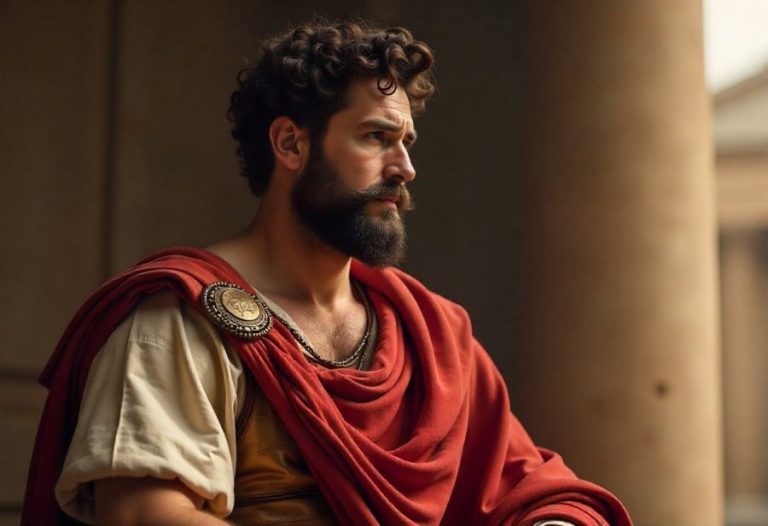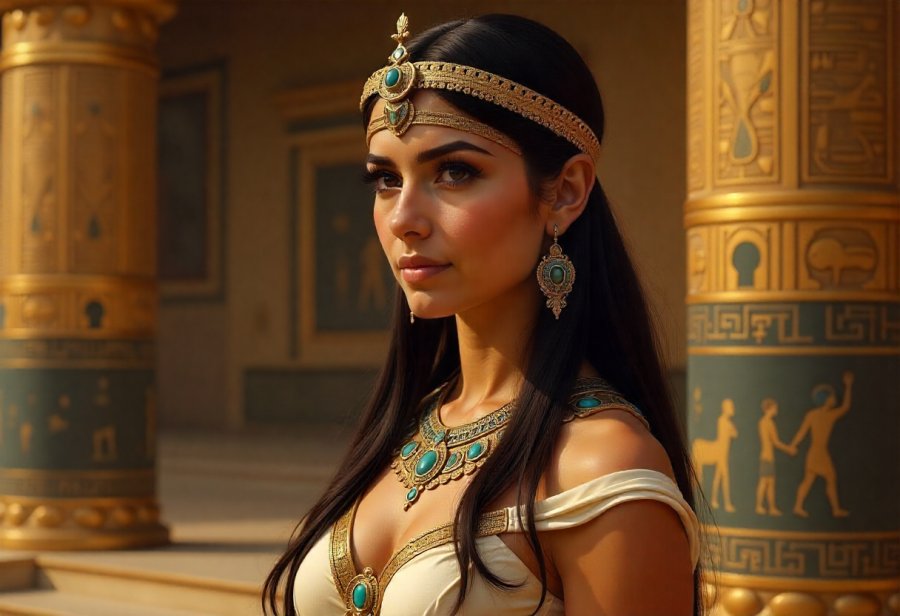
Cleopatra VII is often remembered for her beauty and romantic tales, but her true legacy lies in her extraordinary intellect, diplomacy, and leadership skills. Could her influence have been rooted more in strategic mastery than in allure? This portrayal reveals her as a scholar-queen who skillfully balanced Egyptian tradition with Greek heritage, forging powerful alliances with Rome through calculated diplomacy. Supported by her patronage of Alexandria’s legendary Library and her engagement with science and philosophy, Cleopatra’s influence extended beyond superficial glamour to intellectual and cultural prominence. Her resilience amid internal power struggles and external threats exemplifies strategic adaptability, making her a symbol of leadership driven by wisdom rather than charm. Modern scholarship increasingly recognizes her as a formidable ruler whose impact was shaped by cultural insight, multilingual abilities, and political finesse. Her true legacy challenges us to see leadership as rooted in knowledge, resilience, and influence—timeless qualities that continue to inspire.
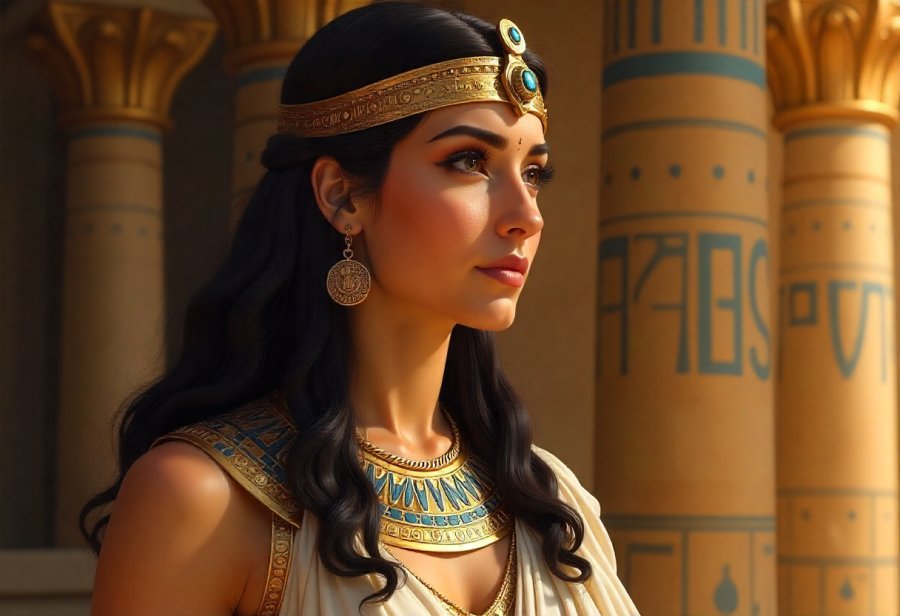
Cleopatra’s True Power Lies in Her Mind and Leadership Mastery
Cleopatra VII is often remembered for her beauty and the romantic stories that surround her, but her true strength went far beyond appearances. She was a masterful ruler, known for her sharp intelligence and political savvy. Her ability to navigate Egypt’s turbulent landscape, maintain independence, and forge powerful alliances highlights a leadership style rooted in strategic thinking and cultural understanding. Cleopatra’s influence was driven by her mind—an asset that allowed her to survive and thrive amid the chaos of her era.
Her reign took place during a time when Egypt was a vibrant center of learning and culture. Alexandria, home to the legendary Library, symbolized her commitment to knowledge and scholarship. Cleopatra patronized this hub of intellectual activity, recognizing that support for learning could strengthen her position and project Egypt’s cultural power. Her engagement with science, philosophy, and arts was not just for personal enrichment but a deliberate move to bolster her authority and inspire loyalty.
Far from the romanticized image of a seductress, Cleopatra was a resilient and adaptable leader. She balanced Egyptian religious traditions with her Greek heritage, presenting herself as both a divine ruler and a culturally savvy diplomat. Her understanding of symbolism and divine kingship helped legitimize her authority, while her diplomatic skills allowed her to build alliances with Rome’s most influential leaders—Julius Caesar and Mark Antony. These relationships were driven by calculated political motives rather than superficial charm, showcasing her mastery of influence and negotiation.
Today, her legacy is evolving beyond myths and Hollywood portrayals. Modern scholarship emphasizes her intelligence, multilingual abilities, and patronage of knowledge. Recognizing her as a scholar-queen challenges outdated narratives, positioning her as a leader whose power came from her mind and strategic insight. Her story inspires contemporary discussions about leadership, gender, and resilience, emphasizing that true influence is rooted in wisdom and cultural intelligence.
Understanding Cleopatra’s true legacy involves seeing her as a visionary who used her intellect and diplomacy to shape history. Her ability to adapt, foster knowledge, and command loyalty through strategic thinking remains relevant today. Her life is a testament to the power of the mind in leadership—an enduring lesson that greatness often lies in resilience, intelligence, and the capacity to navigate complex worlds with insight and purpose.
Navigating Egypt’s Cultural and Political Crossroads During Cleopatra’s Reign
During Cleopatra’s reign, Egypt stood at a crossroads of culture, politics, and commerce, nestled at the heart of the ancient Mediterranean world. The Ptolemaic dynasty, established by Macedonian Greeks after Alexander the Great’s conquest, had ruled Egypt for nearly three centuries by her time. This lineage created a unique blend of Greek traditions intertwined with Egypt’s long-standing religious and cultural practices, often leading to internal tensions and shifting loyalties.
Alexandria, the empire’s jewel, was more than just a capital—it was a vibrant hub of scholarship, innovation, and international trade. The legendary Library of Alexandria symbolized Egypt’s intellectual vibrancy, attracting scholars from across the Mediterranean. Cleopatra understood the strategic importance of supporting this center of learning, knowing that fostering knowledge could bolster her political standing and project Egypt’s cultural influence far beyond its borders.
Her early years as ruler were marked by complex power struggles. Initially, she co-ruled with her younger brother Ptolemy XIII, but their rivalry quickly escalated into civil conflict. As a woman in a male-dominated world, Cleopatra had to demonstrate resilience and cunning, navigating court intrigue and shifting alliances to assert her authority. Her ability to consolidate power relied heavily on diplomatic finesse and strategic negotiation, traits that would define her leadership.
Externally, Egypt faced the rising threat of Roman expansion. Rome’s influence was spreading rapidly, making Egypt’s independence increasingly fragile. Cleopatra’s alliances with Julius Caesar and later Mark Antony were not driven by personal affection but by calculated political moves to preserve her kingdom’s sovereignty. Her diplomatic skills and cultural diplomacy helped her negotiate her position amid the tides of imperial ambition, often turning potential threats into opportunities.
Culturally, Cleopatra embraced her Egyptian roots while also honoring her Macedonian Greek heritage. She adopted divine kingship symbolism, portraying herself as a living goddess to legitimize her authority, while respecting Greek traditions to unify her diverse subjects. This cultural fluency was essential in maintaining stability and loyalty across her realm, allowing her to balance multiple identities seamlessly.
Her strategic balancing act extended to governance, where she supported Egyptian religious practices and promoted scholarly pursuits. Patronage of the Library of Alexandria and engagement with science and philosophy underscored her understanding that knowledge was a vital tool of power. This focus on learning and cultural exchange elevated Egypt’s status in the ancient world and helped her forge alliances rooted in shared intellectual values.
Throughout her rise, Cleopatra’s ability to adapt to shifting geopolitical realities set her apart. She skillfully manipulated alliances, respected cultural symbols, and used her intelligence to maintain her authority despite external pressures. Her mastery of diplomacy and internal governance allowed her to prolong Egypt’s independence longer than many expected, even as Rome’s dominance loomed large.
Understanding this complex landscape reveals that Cleopatra’s leadership was rooted in a nuanced grasp of her world—where cultural, political, and military strategies intertwined. Her talent for navigating these intertwined spheres with intelligence and resilience laid the groundwork for her enduring legacy, illustrating that true power often lies in strategic adaptability and cultural insight.
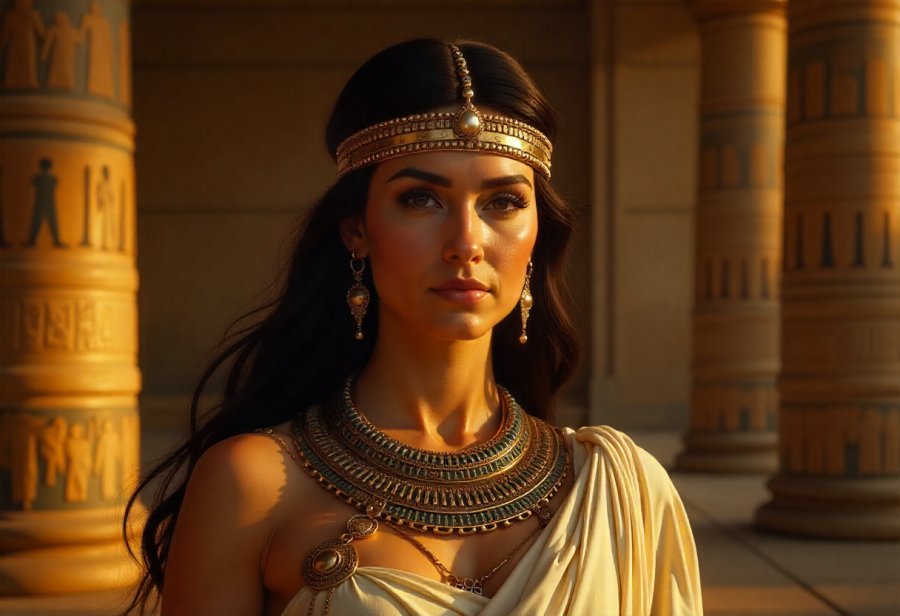
Modern Perspectives Reshape Cleopatra’s Image: From Myth to Mastermind
Today, perceptions of Cleopatra are shaped by a blend of scholarly research, popular culture, and ongoing debates. While Hollywood films and bestsellers often emphasize her beauty and romantic liaisons, recent scholarship shifts the focus toward her intelligence, diplomatic skill, and leadership qualities. This broader view paints her as a powerful ruler whose influence stemmed from her strategic mind, not just her appearance or charm.
Modern historians are working to peel away the myths that have long overshadowed her achievements. Instead of seeing her solely as a seductress, they recognize Cleopatra as a multilingual scholar-queen—fluent in Egyptian, Greek, Latin, and Aramaic—who supported Alexandria’s legendary Library and engaged deeply with science, philosophy, and arts. This perspective highlights her as a leader driven by knowledge and cultural exchange, rather than superficial glamour.
Cultural attitudes toward women in leadership also influence her current image. Today’s society celebrates female leaders who demonstrate resilience, intelligence, and diplomatic finesse—traits Cleopatra embodied fully. Her story encourages a reevaluation of leadership qualities, emphasizing cultural intelligence, adaptability, and strategic patience over appearance or seduction. This shift helps position her as a model for modern female leadership, emphasizing strength of mind over myth.
Despite these advances, gaps remain. Most ancient accounts—mainly Greek and Roman—tended to depict her through a biased lens, often emphasizing her relationships with Rome’s powerful men. Egyptian sources are less prominent, and archaeological evidence remains limited, making her internal political life somewhat speculative. Recognizing these limitations ensures a balanced understanding that appreciates her as a complex, capable leader beyond the stereotypes.
Ongoing scholarship continues to reshape her legacy, emphasizing her role in fostering cultural diplomacy, intellectual growth, and resilience. Her multilingualism and patronage of the Library of Alexandria reveal a leader who valued knowledge as a form of power. This evolving image moves her beyond the myth of seduction, highlighting her true strength—her mind—and the lasting impact of her leadership.
Deepening Appreciation: Engaging with Cleopatra’s Intellectual and Diplomatic Legacy
To truly understand Cleopatra’s legacy, engaging with her story through various methods can be incredibly illuminating. Primary sources—such as inscriptions, coins, and archaeological artifacts—offer a direct window into her world. These tangible pieces of history reveal how she presented herself and governed, challenging superficial assumptions and highlighting her mastery of imagery and symbolism as tools of influence.
Reading modern histories that focus on her diplomatic strategies, scholarly pursuits, and political resilience helps paint a fuller picture of her leadership. Many recent works emphasize her multilingual abilities, patronage of Alexandria’s renowned Library, and her support for science and arts. These elements underscore her intellectual strength, positioning her as a leader driven by knowledge rather than mere beauty or charm.
Creative approaches bring her story to life in ways that resonate today. Viewing her through art, theater, or digital media makes her achievements more accessible and engaging. Virtual reconstructions of Alexandria or interactive exhibits about her diplomatic meetings turn historical facts into immersive experiences. These methods foster emotional connections and inspire curiosity, making her complex character more relatable.
Participating in discussions about female leadership and ancient diplomacy further deepens appreciation. Podcasts, workshops, or educational programs that explore her tactics reveal lessons still relevant now. Reflecting on how she balanced Egyptian religious symbolism with Greek traditions, or how she navigated alliances with Rome’s most powerful figures, offers insights into strategic influence, patience, and cultural intelligence that transcend time.
Active engagement—whether through role-playing decision scenarios, designing case studies based on her strategies, or creating artistic projects—transforms passive knowledge into personal understanding. These approaches help internalize her methods of influence, negotiation, and resilience, turning her legacy into a source of inspiration. Such experiences deepen the appreciation of her leadership as rooted in intelligence, adaptability, and strategic thinking.
By combining evidence, creative expression, and critical reflection, we move beyond myths to recognize Cleopatra as a master strategist of the mind. Her ability to leverage knowledge, cultural insight, and diplomatic finesse shaped her enduring influence. Exploring her story through these immersive methods allows us to see her not just as a historical figure, but as a timeless example of leadership driven by intellect and resilience.
Lessons from Cleopatra: Resilience, Wisdom, and the Power of the Mind
Cleopatra’s true legacy goes far beyond her romantic liaisons or the glamorous myths that have long overshadowed her story. At its core, her influence rested on her exceptional mind—her strategic thinking, diplomatic finesse, and leadership skills. She understood that lasting power came from intelligence, cultural insight, and the ability to adapt to a complex and often hostile environment. Recognizing this shifts the focus from superficial notions to the qualities that truly shaped history.
Her alliances with Julius Caesar and Mark Antony weren’t mere political accidents; they were carefully crafted moves to secure Egypt’s sovereignty. These relationships exemplify her mastery of influence and negotiation, demonstrating how she used her diplomatic skills and cultural understanding to turn potential threats into opportunities. Her ability to navigate these treacherous waters prolonged Egypt’s independence far longer than many would have expected, highlighting her resilience and strategic foresight.
Supporting the Library of Alexandria and engaging with science, philosophy, and the arts underscored her belief in knowledge as a vital source of power. Cleopatra understood that wisdom and learning weren’t just personal pursuits but essential tools for effective leadership. Her patronage fostered intellectual growth and cultural exchange, elevating Egypt’s status as a center of innovation and scholarship. This focus on fostering knowledge was a deliberate move to strengthen her authority and secure her legacy.
Culturally, Cleopatra skillfully balanced her Egyptian religious traditions with her Macedonian Greek heritage. She portrayed herself as a divine ruler while respecting Greek customs, blending symbols and beliefs to unify her diverse subjects. This cultural synthesis was key to maintaining loyalty and stability across her realm, showing her mastery of symbolism and political nuance. Her ability to embody multiple identities made her a resilient and adaptable leader.
Her leadership teaches us that resilience, adaptability, and cultural intelligence are essential in navigating both political landscapes and personal challenges. Cleopatra’s capacity to adjust her strategies and embrace change underscores the importance of mental agility. Her story reminds us that true influence depends on insight, patience, and a willingness to learn from circumstances, rather than superficial appearances.
Her legacy is a testament to the power of the mind. Cleopatra demonstrated that mastery over knowledge, diplomacy, and cultural symbols could shape history more profoundly than fleeting beauty or charm. Her life exemplifies how intellectual strength and strategic resilience create a lasting impact—an inspiring model for leadership rooted in wisdom and adaptability. Reflecting on her story encourages us to value mental agility and cultural understanding as the true foundations of enduring influence.
About the Author