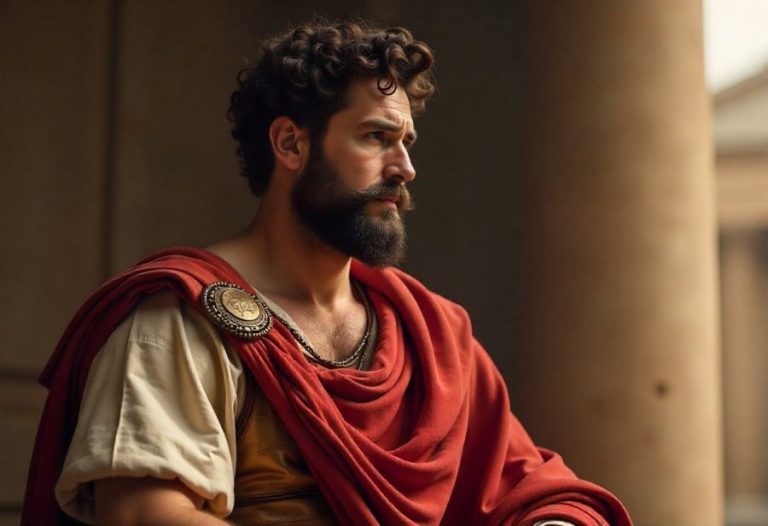
Leonardo da Vinci is celebrated as a quintessential Renaissance genius whose talents extended far beyond art into science, engineering, and innovation. His notebooks reveal a mind obsessed with understanding the universe, featuring sketches of flying machines, anatomical studies, and mechanical devices centuries ahead of their time. This exploration prompts a provocative question: could his hidden ideas still hold the key to future breakthroughs? By deciphering his incomplete designs and overlooked concepts, modern technology—such as digital imaging and 3D modeling—may unlock secrets that inspire advances in aviation, robotics, and renewable energy. Leonardo’s interdisciplinary approach, blending art with science, offers a timeless blueprint for tackling today’s complex challenges. His relentless curiosity and holistic thinking continue to influence innovation, urging us to look beyond boundaries and reimagine what is possible. Could revisiting his uncharted work propel us into a new era of discovery and progress?
Unveiling Leonardo da Vinci’s Multifaceted Genius
Leonardo da Vinci is often celebrated as the ultimate Renaissance figure, but his talents went far beyond his iconic paintings. He was a relentless seeker of knowledge, constantly exploring new ideas and pushing the limits of what was thought possible. His notebooks are filled with sketches of flying machines, anatomical diagrams, and intricate mechanical devices—many of which were centuries ahead of their time. Leonardo saw art and science not as separate realms but as interconnected pursuits, each fueling his curiosity to understand the world more deeply.
The Renaissance environment played a crucial role in shaping Leonardo’s expansive interests. This period, spanning roughly from the 14th to the 17th century, fostered a renewed fascination with natural phenomena and human potential. Wealthy patrons like the Medici supported artists and thinkers, creating an atmosphere of experimentation and discovery. It was a time that encouraged questioning old traditions and exploring new ideas—conditions that allowed someone like Leonardo to thrive across disciplines.
His achievements are nothing short of astonishing. As an artist, he gifted the world with masterpieces such as the Mona Lisa and The Last Supper, celebrated for their emotional depth and technical mastery. But Leonardo’s curiosity extended into science, where his anatomical studies provided insights that still influence medicine today. His engineering sketches of flying devices, armored vehicles, and complex machines reveal a visionary mind that bridged imagination with potential real-world application.
What truly set Leonardo apart was his ability to see links between art, science, and engineering, turning observations into groundbreaking ideas. His holistic approach allowed him to approach problems from multiple angles, often discovering solutions that others overlooked. This way of thinking—integrating different fields—remains a blueprint for innovation today.
Leonardo’s influence endures because his way of thinking is timeless. His mastery of perspective, anatomy, and mechanics laid the groundwork for modern advancements in aviation, robotics, and medical technology. His relentless curiosity and refusal to accept simple answers continue to inspire those pushing the boundaries of what’s possible. His legacy reminds us that breakthroughs often come from making unexpected connections and seeing the world through a curious, open mind.
Unlocking Leonardo’s Secrets and Uncharted Inventions
Leonardo da Vinci’s notebooks are like a treasure chest filled with ideas waiting to be explored. Hidden within his sketches are concepts that remained largely misunderstood or overlooked for centuries, revealing a mind far ahead of his time. His detailed drawings of flying machines, for instance, hint at early visions of aviation that wouldn’t become reality until hundreds of years later. These aren’t mere doodles; they demonstrate a sophisticated grasp of mechanics and physics, long before these fields were formally developed. Deciphering these sketches could unlock secrets that inspire future breakthroughs in technology and engineering.
Many of Leonardo’s inventions, such as helicopter-like devices or water flow models, still puzzle modern scientists. His studies of fluid dynamics, gear systems, and mechanical motion show a fascination with harnessing natural forces—ideas that continue to influence engineering today. Though he left many sketches as rough outlines or incomplete models, they hint at innovations that might have revolutionized transportation, warfare, or energy if fully realized. These incomplete designs challenge us to imagine what could have been, had history followed a different path.
What’s striking is that Leonardo often didn’t develop his ideas into full prototypes. Instead, he sketched partial concepts and left room for interpretation, creating a layered blueprint of potential innovations. His sketches of flying devices resemble early helicopters, while his water studies prefigure modern turbines. These designs reflect a systematic curiosity about natural phenomena and mechanical principles, predating formal engineering by centuries. Unlocking these ideas today requires interdisciplinary effort—combining art history, physics, and engineering—to fully understand and perhaps even recreate his visions.
Many of his most intriguing concepts remain hidden because they were never built or fully developed. Designs for self-propelled carts, mechanical cranes, and water pumps suggest a relentless pursuit of automation and mobility. If these sketches had been turned into working models, they might have accelerated technological progress significantly. Examining these overlooked ideas can spark new innovations in robotics, renewable energy, and transportation—areas where his influence is still emerging.
Advances in digital imaging, 3D modeling, and simulation give us powerful tools to analyze Leonardo’s notebooks in unprecedented detail. These technologies allow us to peel back layers of age and obscurity, revealing insights that were once invisible. Each discovery brings us closer to understanding how Leonardo’s uncharted ideas could shape the future. His sketches challenge us to think differently, to see beyond the limits of current technology and to imagine possibilities that are only now within reach.
Revisiting Leonardo’s hidden inventions isn’t just about uncovering history; it’s about unlocking a wellspring of inspiration for tomorrow’s innovations. His relentless curiosity and visionary thinking remind us that many of today’s breakthroughs are rooted in ideas waiting to be rediscovered. As we decode his sketches and interpret his notes, we open doors to solutions for some of our most pressing challenges. Leonardo’s uncharted work invites us to explore, experiment, and push the boundaries of what’s possible—just as he did centuries ago.
Translating Leonardo’s Principles into Modern Innovation
Leonardo da Vinci’s approach to innovation offers a timeless blueprint for addressing today’s complex challenges. His method combined keen observation, hands-on experimentation, and a relentless curiosity that questioned accepted ideas. Modern problem-solvers can emulate this by breaking big issues into smaller, manageable parts and analyzing each with care to uncover hidden insights. His meticulous note-taking and detailed studies remind us that progress often begins with understanding the fine details before jumping to solutions.
A key lesson from Leonardo is the power of crossing disciplines seamlessly. He blurred the lines between art, science, and engineering, demonstrating that combining diverse fields can unlock breakthroughs others might miss. Today’s most pressing issues—such as renewable energy, healthcare, or urban development—demand this kind of interdisciplinary thinking. When we connect different perspectives, we often discover innovative ideas and solutions that are otherwise overlooked.
Curiosity was at the core of Leonardo’s process. He constantly asked “how” and “why,” testing ideas through sketches, observations, and experiments. Modern tools like digital simulations and high-resolution imaging allow us to explore these questions more deeply. Emulating his inquisitiveness means questioning assumptions and exploring unconventional pathways, keeping innovation alive. This mindset pushes us to uncover solutions beyond the obvious, opening new avenues for progress.
Leonardo’s iterative approach also offers valuable insight. He refined his ideas through repeated sketches and adjustments, understanding that breakthroughs rarely happen in a straight line. Today’s rapid prototyping and agile development echo this process, enabling us to learn from failures and improve continuously. His patience and willingness to revisit ideas serve as a reminder that meaningful advances often come after many rounds of refinement and experimentation.
Holistic thinking was another pillar of Leonardo’s genius. He viewed art and science as interconnected pursuits, believing that progress in one fueled advancements in the other. This integrated perspective is crucial today when tackling global challenges like climate change or urban planning, where systems thinking and attention to detail are essential. Balancing big-picture vision with meticulous analysis leads to more effective, innovative solutions that recognize the interconnected nature of modern problems.
Ultimately, Leonardo’s principles encourage us to stay curious, collaborative, and persistent. His methods—observation, interdisciplinary exploration, iteration, and holistic thinking—remain relevant guides. By adopting this mindset, we can accelerate innovation, decode his uncharted ideas, and turn them into real-world solutions. His timeless blueprint reminds us that breakthroughs often come from daring to explore the unknown, blending art, science, and curiosity to shape a better future.
Expert Insights on Leonardo’s Enduring Influence
Many historians, scientists, and innovators agree that Leonardo da Vinci’s influence endures because of his extraordinary ability to seamlessly bridge multiple disciplines and challenge conventional thinking. His notebooks reveal a mind driven by relentless curiosity and experimentation, laying the groundwork for modern scientific inquiry long before it became formalized. His sketches and notes serve as evidence of a thinker who questioned everything—from anatomy to mechanics—setting a precedent for a holistic approach that continues to inspire today’s multidisciplinary exploration.
Scientists especially admire Leonardo’s detailed anatomical drawings and engineering concepts, which still inspire breakthroughs in medicine and technology. His meticulous observations of the human body created a foundation for modern anatomy and biomechanics, while his sketches of flying machines and mechanical devices prefigured aerospace engineering and robotics. Many see his work as a testament to how curiosity paired with meticulous design can ignite technological evolution that remains relevant centuries later.
Contemporary innovators often point to Leonardo’s ability to connect art, science, and engineering as a blueprint for creative problem-solving. His habit of seeing links between seemingly unrelated fields encourages today’s collaborative efforts across diverse disciplines. When developing new medical devices, sustainable energy solutions, or urban innovations, many draw inspiration from his example of thinking broadly and synthesizing ideas — a practice that still leads to breakthroughs others might overlook.
Scholars highlight that Leonardo’s relentless curiosity and willingness to challenge accepted ideas foster resilience and persistence—traits vital for today’s fast-paced innovation landscape. His habit of questioning everything and testing hypotheses through detailed sketches and experiments exemplifies a mindset that pushes boundaries and explores uncharted territory. This approach inspires researchers and inventors to remain open-minded and daring, even when the path isn’t clear.
Across industries, Leonardo’s legacy manifests in projects ranging from aerospace drones to advanced prosthetics. His early ideas about harnessing natural forces and automating movement underpin many modern technologies. As researchers revisit his sketches with new tools like 3D modeling and AI, they uncover insights that could accelerate innovation—proof that his influence is alive and well in the cutting edge of science and engineering.
What makes Leonardo’s impact so enduring is his unique capacity to inspire us to see connections where others see separation. His interdisciplinary mindset challenges us to think beyond silos, encouraging a fluid exchange of ideas that sparks creative solutions. The echoes of his curiosity-driven approach continue to shape how we address complex problems, reminding us that innovation often lies at the intersection of diverse fields.
In essence, experts agree that Leonardo da Vinci remains a timeless symbol of daring exploration and integrated thinking. His legacy urges us to embrace curiosity, challenge assumptions, and look beyond traditional boundaries—traits that are crucial as we forge new paths in science, technology, and human progress. His influence isn’t just historical; it’s a call to action for future generations to unlock their own potential by thinking boldly and interconnectedly.
Drawing Conclusions and Exploring Future Pathways from Leonardo’s Legacy
Leonardo da Vinci’s legacy reminds us that curiosity and interdisciplinary thinking are timeless drivers of progress. His relentless pursuit of understanding both the natural world and human potential laid a foundation that continues to spark innovation today. By exploring his uncharted inventions and hidden insights, we open new opportunities to address some of our most pressing challenges—from renewable energy to medical breakthroughs. Embracing Leonardo’s holistic approach encourages us to think beyond traditional boundaries, blending art, science, and engineering to create solutions that were once unimaginable.
Looking ahead, fostering environments that prioritize experimentation, open-minded exploration, and responsible innovation is crucial. When we nurture curiosity and challenge assumptions, we unlock pathways to discoveries that can transform industries and improve lives. Digital tools like 3D modeling, artificial intelligence, and advanced imaging allow us to decode Leonardo’s sketches with unprecedented clarity, turning centuries-old ideas into practical innovations. These technologies serve as bridges, connecting the genius of the past with the possibilities of the future.
Deciphering Leonardo’s hidden work requires more than technical skills; it demands a mindset of relentless inquiry. Viewing his sketches and notes as blueprints for future progress invites us to push beyond current limits. Many of his ideas about flight, mechanics, and energy remain relevant today, inspiring solutions that could redefine our understanding of what’s possible. By revisiting and reinterpreting his concepts, we can accelerate breakthroughs and realize inventions that once existed only in the realm of imagination.
However, progress must be balanced with ethical responsibility. As we explore and develop Leonardo’s ideas, considering societal impacts ensures that innovation benefits everyone. His spirit of daring and discovery encourages us to push boundaries thoughtfully, blending boldness with humility. This mindset helps us navigate the complex landscape of modern technology while honoring the curiosity that drove Leonardo for centuries.
Building on his uncharted ideas, we tap into a vast well of potential across science, art, and technology. His ability to see connections where others see separation remains a powerful lesson. By thinking creatively and connecting diverse disciplines, we open new doors to solutions for energy, health, transportation, and more. Leonardo’s blueprint for innovation isn’t just a relic of the past; it’s a call to action to unlock our own creative potential and shape the future.
The next chapter of human progress depends on our willingness to learn from Leonardo’s example. Staying curious, collaborative, and persistent will be key. As we decode his sketches and bring his visions closer to reality, we embark on a journey of discovery that honors his genius and pushes the boundaries of what’s possible. Each new insight inspired by Leonardo’s work can serve as a catalyst—fueling the innovations that will define tomorrow. The future belongs to those brave enough to explore the unknown, guided by the timeless curiosity of a true Renaissance mind.
About the Author